Detailed Explanation Of Canadian Immigration Supervision: Residency Requirements, Exemption Conditions And Maple Leaf Card Regulations, You Must Know

Detailed Explanation Of Canadian Immigration Supervision: Residency Requirements, Exemption Conditions And Maple Leaf Card Regulations, You Must Know
Students and parents who plan to study in Canada and immigrate to Canada should not only master some common sense about Canada but also have some knowledge about Canadian naturalization when going through immigration procedures. The following is a detailed introduction to the "immigration supervision" in Canadian naturalization.
The legal provisions on the residence period of immigrants in Canada are called "immigration prison". Since immigrants need to live in Canada for a corresponding period of time, some investment immigrants refer to this as "immigration prison".
"Immigration prison" has two meanings:
The first meaning:
All Canadian immigrants are required to fulfill the residency obligation. They need to live in Canada for 2 years in every 5 consecutive years. They have to fulfill this obligation as long as they have not become a citizen. There are only very few cases where immigrants can be exempted from the obligation to reside in Canada. The following two situations can exempt them from the obligation to reside in Canada:
1. Accompany your Canadian citizen spouse to live overseas
2. Employed by Canadian companies and sent to work overseas
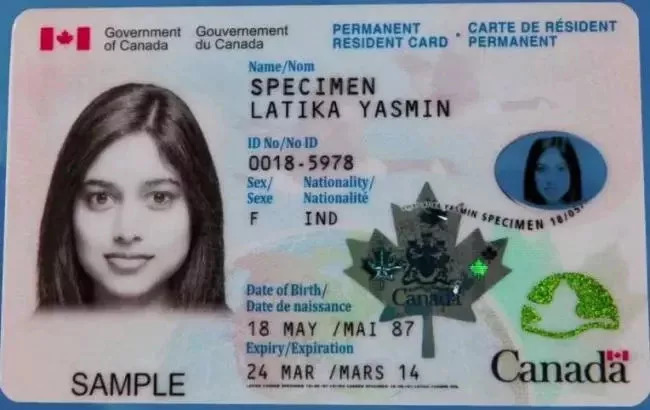
Since the implementation of the Maple Leaf Card system, the Canadian government has strengthened its supervision of the residence time of Canadian immigrants. The entry and exit information of immigrants must be recorded. If immigrants fail to fulfill their residency obligations, their immigration status will be cancelled. The Canadian Immigration Service also stated that residence exemption applications based on study or employment abroad will no longer be accepted. After the implementation of the new immigration law, the hearing of individual cases of residence period exemption is limited, and new immigrants should handle residence issues carefully.
Second meaning:
If a Canadian immigrant intends to become a Canadian citizen, he or she must have accumulated up to 3 years of residence in Canada in the 4 years before applying for naturalization. This residency requirement is not waived. Canada accepts dual nationality, and after naturalization, there are no restrictions on residence period. Whether you choose to become a Canadian citizen or not does not have any substantial impact on your life in Canada. Therefore, many immigrants have not been naturalized even though they have lived in Canada for more than 10 years. The immigration supervision obligations of family members are in a state of separation. Members can neither live on behalf of each other nor influence each other. For example, if the main applicant fails to meet the residency requirements and thus gives up his/her status, the children and spouse will not be affected by this. There are many immigrants. On the one hand, they are eager to obtain Canadian identity, but on the other hand, they do not want to give up their career in China. Therefore, they appear hesitant when applying for immigration. In reality, however, there are many legal ways to achieve both ends.
Analyzing Canadian Immigration Supervision Issues
Those who apply for Canadian investment immigration are mostly successful people who have stable businesses in China or have a large network of people. They choose to immigrate to Canada, either for the sake of their children's education or to obtain international status. However, most of them are not willing to give up the business opportunities they have in mainland China. So, is there a way to solve this problem? How to maintain Canadian status and whether to naturalize has become a bottleneck for applicants.
According to a senior Canadian investment immigration consultant:
Under Canada's new immigration laws, new immigrants can maintain their immigration status by living in Canada for a cumulative two years within the five-year period after landing in Canada. And Canadian law also stipulates that living abroad is regarded as equivalent to living in Canada if the following circumstances exist:
A permanent resident living abroad with a spouse who is a Canadian citizen is equivalent to living in Canada, and minor children will be treated equally.
(2) As a permanent resident who is a wholly-owned employee of a Canadian company, working and living outside Canada is equivalent to living in Canada, and his spouse and minor children are accompanying him, which is also equivalent to living in Canada.
This door is a door opened by the law for those listed above. There are many such situations. Some companies are registered in Canada, operate legally in Canada, and have real needs to send personnel to stay in China or other countries for a long time.
If you want to naturalize in Canada, according to Canadian law, you must have lived in Canada for three years in total in four years before you can apply. However, if you don’t want to give up your Chinese nationality (Canada recognizes dual nationality, China does not) and just want to retain your Canadian permanent resident status, you don’t need to consider this. Most people choose to retain their green card status. After all, as permanent residents, they can also enjoy the various rights and interests provided by Canada in terms of education, medical care and social welfare.
On top of this, the editor of Hualu has compiled relevant information for everyone. In daily life, we should master some commonly used legal knowledge, so that we can use legal knowledge to protect our rights when we need help. If you have any other doubts, welcome to the Hualu website for legal consultation. We will have lawyers give you professional insights.