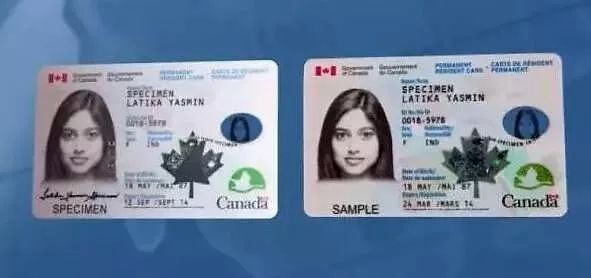
Full Analysis Of Canadian Maple Leaf Card Validity Period And Immigration Supervision Requirements. Pay Attention To These Situations.

Full Analysis Of Canadian Maple Leaf Card Validity Period And Immigration Supervision Requirements. Pay Attention To These Situations.
The "Immigration Supervision" requirement is only for permanent residents. Once you become a Canadian citizen and become a Canadian citizen, you no longer need to meet the "Immigration Supervision" requirement of living for 2 years every 2 years. As a country that values human rights and freedom, Canada has a mandatory requirement of two years of residence in five years.
When will the "immigration surveillance" status be verified?
When you plan to apply for a new Maple Leaf Card, or when you apply for a permanent resident travel document due to many unexpected circumstances such as forgetting or losing the Maple Leaf Card, your "immigration surveillance" status will be checked.
In addition, when you return to Canada and enter the country again, your "immigration surveillance" status will be checked. Of course, not every entry inspection will be so strict. However, once the Canada Border Services Agency, also known as CBSA, finds that your actual situation may not meet the "residence obligation", it may request verification and require you to provide proof of residence, etc.
Never take the validity period of the Maple Leaf Card as a criterion to determine whether the "residence obligation" has been fulfilled. Applicants who have obtained permanent residence status must treat the "immigration supervision" requirements carefully and accurately calculate the time and entry date.
For permanent residents, there are "immigration supervision" requirements. Once you become a Canadian citizen and become a Canadian citizen, you no longer need to meet the "immigration supervision" requirement of living for 2 years every 2 years.

What should I do if I can’t actually live in Canada?
Canada is a country that attaches great importance to human rights and freedom. In addition to the rigid rule of staying for 5 years and 2 years, there are also three exceptions. As long as the conditions of these three exceptions are met, even if you live outside Canada, the time you live can be counted within the scope of immigration supervision.

What should I do if I don’t meet the residency requirements?
If the residency requirements are not met, you will have trouble re-entering Canada. In a few cases, if humanitarian reasons can be given, especially when there are spouses and minor children with legal status in the country, border officials can implement humanitarian measures and allow entry.
In most cases, the Immigration Department will give the permanent resident an opportunity to appeal. As long as the permanent resident does not voluntarily discard the Maple Leaf Card, he will generally be given an opportunity to appeal. The permanent resident must explain at the hearing the reasons for regaining permanent residency, his relationship with Canada, the status of his children at home, etc.
If the permanent resident succeeds at the hearing, his Maple Leaf Card will continue to be maintained. If he fails, he can appeal to the federal court. If he loses, the original decision of the Bureau of Immigration Appeals will be upheld, otherwise the case will be sent back to the Bureau of Immigration Appeals for retrial.
When dealing with such situations, you need to master some principles. After Canadian Customs makes a judgment, you must explain your situation and give humanitarian reasons as much as possible. Secondly, it is crucial to prove that you have a close enough relationship with Canada. In terms of Canadian taxes, real estate, relatives, career, etc., you can convince the judge that you are willing to settle in Canada. You must show a strong intention to live in Canada. If you have children in Canada, it will be of great help to retain your permanent residence.

Canadian Federal Skilled Immigration

Canadian Federal Skilled Immigration Advantages