Complete Guide To Applying For Canadian Maple Leaf Card: Detailed Explanation Of English CLB5 Requirements For International Students

Complete Guide To Applying For Canadian Maple Leaf Card: Detailed Explanation Of English CLB5 Requirements For International Students
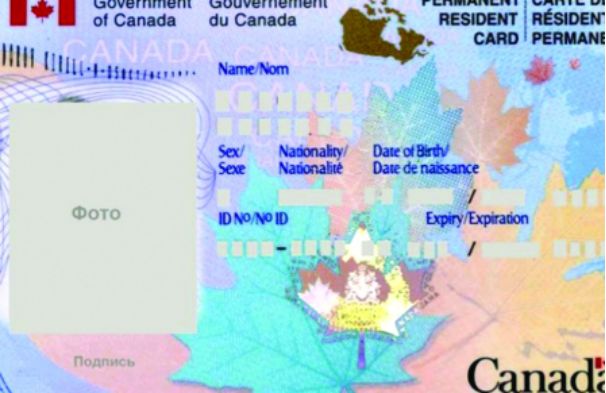
How do international students in Canada apply for a Maple Leaf Card? The Maple Leaf Card (PR) that everyone is familiar with functions as a U.S. green card and is a permanent residence status certificate after immigration. For international students, there are many benefits to applying for permanent residence in Canada.
How do Canadian international students who want to apply for a Maple Leaf Card perform application operations? The maple leaf card that everyone is familiar with is PR, which has the same function as the US green card. It is a permanent residence identity document after immigration. For international students, applying for permanent residence in Canada has many benefits and advantages! Let’s take a look at the relevant specific situation and dynamics below!

Conditions for Canadian students to apply for Maple Leaf Card
Applicants who have graduated must be in Canada;
You must have completed a Canadian professional or higher level professional course within the last 4 years, that is, from January 2017 onwards.
Should be offered a job in Canada (unrestricted, no minimum working years required);
Applicants need to meet the following four requirements, and their English score must reach CLB level 5, which is equivalent to IELTS, of which reading is 4 points and the other three points are 5 points.
Conditions for ordinary people to apply for a Canadian Maple Leaf Card
1. In each five-year period, the total time actually lived in Canada is 730 days;
First, bring your spouse with Canadian nationality to accompany you abroad, and second, the children will travel with their parents who have Canadian nationality.
3. Join a Canadian enterprise abroad full-time, or engage in public service in Canada or a certain province;
4. As a permanent resident of Canada, you are accompanying your child abroad, or your child is traveling with your parents who have permanent resident status in Canada, working full-time in a Canadian company, or carrying out official activities in Canada or a certain province.
5. Other situations governing the terms.
Advantages of Canadian Maple Leaf
Employment is guaranteed:
For example, those who are Canadian residents. The Canadian residents mentioned here include both permanent residents and citizens. If they work for half a year in a row in a row, and then are unable to continue working due to unemployment, illness, childbirth, or adoption of children, etc., then they can obtain temporary income through a national employment insurance program. The so-called temporary income is actually paid regularly within a certain period. This is a subsidy, and its purpose is to reduce the impact of unemployment.
Health insurance is available:
In every Canadian province, there is a type of medical insurance plan, which can provide low-price and high-quality medical security services. The Canadian government spends about 4.8 billion Canadian dollars every year on health care welfare projects. This kind of insurance covers various medical services, including consultation fees, hospitalization and surgery, but does not include medication costs. No matter how big or small the illness is, as long as your family doctor determines that hospitalization or even surgery is necessary, all covered expenses will be borne by the health insurance plan.
You can apply for social insurance benefits:
The cornerstone of the system is social security, which is to protect the basic living standards of every Canadian resident. When Canadian residents have no income, they can apply for this benefit if their bank deposit does not exceed 1,000 Canadian dollars. If you are single, you can get 500 to 700 Canadian dollars per month, and if you are a family of three, you will get 1100 to 1300 Canadian dollars per month, which is enough to maintain a low level of living security needs.
The sharing about "How do international students in Canada apply for a Maple Leaf Card" is the above content. International students who have ideas can start preparing to apply! In addition, even if you obtain Canadian permanent resident status, even if your Maple Leaf Card expires, it does not mean that you will lose your permanent resident status.
You can get the global study abroad white paper for free, so as to understand the application conditions of each university, then the fees of each university, and then the start time of each university, and the value of each university.