What Benefits Can Parents Enjoy After Receiving The Canadian Maple Leaf Card?

What Benefits Can Parents Enjoy After Receiving The Canadian Maple Leaf Card?
What is the Canadian Maple Leaf Card? Canada, as a "welfare country" and a livable destination, has always been a very popular country for immigrants. Friends who are interested in immigrating to Canada will definitely see the word "Maple Leaf Card" appearing in promotions or articles. What is a Maple Leaf Card?
As a country known as a "welfare country" and a livable destination, Canada has always been an extremely popular country for immigrants. Those who have the idea of immigrating to Canada will definitely see the term "Maple Leaf Card" in publicity or articles. So what is the Maple Leaf Card? How much do you know about the Canadian Maple Leaf Card?
1. What is the Maple Leaf Card?
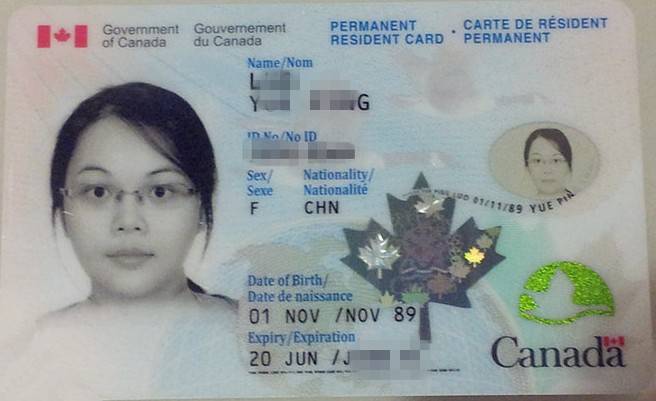
The card issued by Canada, called the Permanent Resident Card, is also commonly known as the Maple Leaf Card. It is a document used by Canadian permanent residents to prove their identity. This document is protected by Canadian law and the Canadian Charter of Rights and Freedoms. When a person obtains a Canadian Maple Leaf Card, it means that he has obtained permanent resident status in Canada, but he is still a Chinese national. Holders of this status can live in Canada for a long time, work and study locally, and enjoy the benefits provided by the local area.
2. What are the benefits of Maple Leaf Card?
①Enjoy complete welfare benefits
Everyone knows that Canada has always been famous for its many benefits. As a permanent resident of Canada, like a Canadian citizen, you can enjoy free education, free medical care, and other social benefits, such as 12-year compulsory education, public medical benefits in the province of residence, generous child milk benefits, pensions, child care subsidies, family subsidies, etc. Different from citizens, Canadian permanent residents do not have the right to vote or be elected, and they cannot engage in certain jobs involving national security interests. In addition, holders of Maple Leaf Cards cannot enjoy the visa-free convenience of Canadian passports to 133 countries and regions around the world.
②Free travel between China and Canada
If you obtain a Maple Leaf Card, you will be able to enjoy the convenience of going through customs by yourself, which can bring a very convenient feeling to applicants who need to frequently travel back and forth between the country and Canada.
③One person applies for immigration for the whole family
When the main applicant obtains the Canadian Maple Leaf Card, his spouse and unmarried children with a minimum age of 22 can accompany him to Canada for immigration, but the parents come to Canada to live in Canada by applying for family reunion.
④It is easier for children to enter school
Canada has many top universities, which attract international students from all over the world. However, those famous universities have restrictions on the number of places for international students, and competition is extremely fierce. If your children get a Maple Leaf Card, they can apply for Canadian universities as local students. There will be more places and a wider range of majors to choose from.
3. How long is the validity period of the Maple Leaf Card?
The validity period of most Maple Leaf cards is five years from the date the card is issued. If the card expires, is lost, damaged, or stolen, your permanent resident status will not change, but you must apply for a new card. Please check the article on this website about the update of the Maple Leaf Card. However, there are some exceptions. For example, due to failure to fulfill residence obligations abroad and the final determination of loss of permanent resident status, the applicant can apply for a one-year temporary card.
According to the relevant provisions of Canadian immigration law, cardholders need to reside for a cumulative two years within the five-year validity period of the card they hold. As long as they have not yet become a citizen of the country, they must always fulfill such residency obligations. Whether you are applying for the first time or applying for a subsequent card after five years, you must pass the "residence test", and all Canadian permanent residents must fulfill their residency obligations for more than 730 days in any five-year period.
4. The two most common categories of Canadian immigrants
There are family-based immigrants and economic immigrants. The first type of family immigration is only applicable to immediate relatives or spouses who have obtained Canadian permanent resident status, or who have obtained Canadian citizenship.
The specific scope of relatives that can be covered is: parents, spouses, children, grandparents; and when applying for Canadian immigration, once the main applicant successfully obtains immigration status, he and his children under the age of 22 can also obtain status as deputy applicants.
The second type is for economic immigrants, with a large number of project branches. According to the categories given by the Canadian Immigration Bureau’s official website, there are 12 categories in total, namely: federal EE, family reunification, provincial nomination, Quebec skilled worker, Atlantic pilot, caregiver, entrepreneurial visa, self-employment, rural and northern pilot, agricultural and food pilot and refugee, etc.
5. How to apply for Maple Leaf Card
When new immigrants land in Canada for the first time, they can apply for it at the New Immigration Office at the immigration office.
When the application is completed, the Canadian Immigration Service will issue the Maple Leaf Card by mail. Under special circumstances, the applicant may be asked to go to any immigration office to collect it. If your Maple Leaf Card is not returned within 180 days, the Maple Leaf Card may be destroyed. If the applicant wants to use it, he or she can only apply again.
4. Residence obligations after obtaining a Maple Leaf Card
Unlike Canadian naturalization, the Maple Leaf Card is a proof of permanent residence for Canadian immigrants. This certificate must be replaced every five years, and the holder of the card must renew it before it expires. According to Canadian immigration law, Canadian permanent residents must fulfill their residency obligations. That is to say, all Canadian permanent residents must live in Canada for a total of 730 days in every five consecutive years. As long as they have not become citizens, they must always fulfill this obligation.
So what does it mean to “reside” in Canada? Including the following 3 situations:
(1) Actual residence in Canada
(2) If you work abroad for a Canadian company, the length of time you live abroad is deemed to be the time you live in Canada.
(3) Accompanying a Canadian spouse or a full-time overseas permanent resident spouse to go abroad. If one spouse is a citizen and the other resident accompanies the citizen (spouse), and they go overseas together starting from Canada, they can be exempted from domestic residence. It should be noted that "going in and out together" is very important, and going out, entering, living, etc. must be together, and there must be continuous evidence to prove it.
At the same time, Maple Leaf Card holders must also pay attention to complying with the requirements of the Immigration Bureau and the Border Department as much as possible in terms of residence time. That is, at the time of entry and the time of applying for Maple Leaf Card extension, 730 days of residence must be met in the five years back from these two time points, otherwise they will be refused entry or fail to renew the Maple Leaf Card.