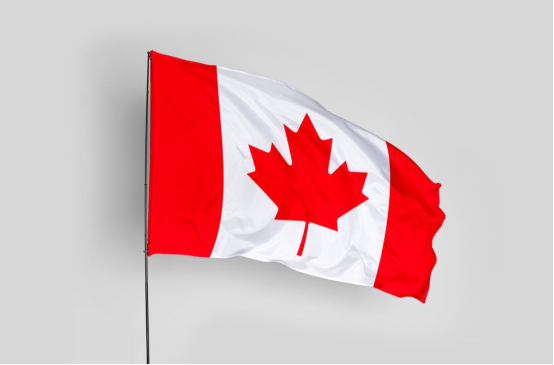
How To Choose Between Maple Leaf Card And Green Card? Compare Canada And The United States Immigration Policies, Tax And Residency Requirements

How To Choose Between Maple Leaf Card And Green Card? Compare Canada And The United States Immigration Policies, Tax And Residency Requirements
When choosing to immigrate, the U.S. Green Card and the Canadian Maple Leaf Card are undoubtedly two very attractive options. These two identities not only represent the legal right to live and work in two highly developed countries, but also mean the ability to enjoy rich social welfare and high-quality education.
Answer: In today's era of globalization, more and more people expect to achieve a better life and development through immigration. The U.S. Green Card and the Canadian Maple Leaf Card, two popular immigration options in North America, often put applicants in a dilemma.
The Green Card of the United States and the Maple Leaf Card of Canada are permanent residence permits granted to foreign citizens by their respective countries. The holders can legally live and work in the country for a long time and study, and enjoy the same rights as citizens of their own country. However, the right to vote and the right to be elected are not covered by this. However, U.S. green card holders are considered tax residents of the United States. No matter where they are, they are required to declare their worldwide income to the U.S. government and then pay corresponding taxes, which limits their freedom to some extent. If Canadian Maple Leaf Card holders do not live in Canada, they do not need to pay taxes to the Canadian government.
There are many ways to apply for a green card in the United States, including family immigration, employment immigration, investment immigration, etc. Among them, the EB-1A Outstanding Talent Immigration and other categories of employment immigration have certain requirements for the applicant’s professional achievements, so there are no restrictions on language, academic qualifications, age, etc. However, U.S. immigration policies have been tightened in recent years. The application process is relatively complicated and cumbersome, and the waiting time for some categories is relatively long.
The Canadian Maple Leaf Card application channels mainly include skilled immigration, employer-sponsored immigration, business immigration and other categories. Skilled immigrants use a points system to comprehensively weigh the applicant's age, academic qualifications, language ability, and work experience factors. Generally speaking, Canada’s immigration policy is relatively relaxed and the approval time is not long.

Those holding a U.S. green card must live in the United States for at least half a year within a year. Otherwise, they may face the risk of having their immigration status revoked. In comparison, the residence requirements for Canadian Maple Leaf Card holders are more flexible. You only need to live for two years in total within five years to maintain your permanent resident status.
Canada is a country that is well-known for its high welfare. Those who hold a Maple Leaf Card as a condition can enjoy benefits such as universal free medical care. Free education for children in public schools is also included in the welfare category. Various child care benefits such as milk subsidies are also available. For example, a child under the age of 6 can receive up to a maximum of CAD 6,765 in milk benefits each year. In addition, Canada will also provide welfare programs such as unemployment insurance, maternity allowances, and childcare allowances.
The United States is relatively limited in terms of social welfare, but its educational resources and medical resources are extremely rich. If you hold a U.S. green card, your children will be able to enjoy low tuition fees in public schools. At the same time, some top universities will also have a certain proportion of admission quotas for green card holders. However, medical expenses in the United States are relatively high, and medical care is not free for all.
As the world's largest economy, the United States has abundant employment opportunities, especially in high-tech, finance, medical and other fields. After holding a green card, you can freely choose your career and are not subject to employer sponsorship restrictions. However, the U.S. job market is very competitive, and some high-paying jobs have certain restrictions for green card holders.
Canada also urgently needs many immigrants to fill the labor gap, especially skilled workers and professional talents. Employer sponsorship is one of the key immigration pathways in Canada, and there are many opportunities for employment after immigration. Furthermore, Canada has a multicultural tradition left over from the past, which makes this place more friendly to immigrants. It is relatively easy for immigrants to integrate into the society as a whole.
The United States, with many of the world's top universities, has rich and diverse educational resources. When green card holders apply for American universities, they can enjoy the same tuition fees and admission opportunities as local students. However, applying to top universities in the United States is difficult and the competition is fierce.
Canada is slightly inferior in terms of university rankings, but its education quality is still quite high, and tuition fees are relatively low for this situation. Children of Maple Leaf Card holders can attend basic education courses provided by public schools for free. For families studying abroad, Canada has certain advantages in the cost-effectiveness of education.
With a U.S. green card, you can enter Canada, Mexico, Singapore and other countries without a visa. In addition, the U.S. green card has a high degree of recognition during global travel, which can reduce the trouble caused by visa application. However, Canadian Maple Leaf Card holders need to apply for a visa to enter the United States, but this visa is easy to obtain and has a relatively long validity period.
The United States has an extremely vast territory, a variety of climates, a high degree of economic development, a diverse culture, and a relatively fast pace of life. Some areas such as California, which has a pleasant climate, are popular areas where Chinese people live. However, American society, with its extremely competitive atmosphere, brings relatively great pressure to life.
Canada is located in the northern part of North America, and its climate is relatively cold. However, cities like Vancouver and Toronto have a more suitable climate. Canadian society is famous for its multiculturalism and tolerance, and immigrants here will find it easier to integrate into local life.
The decision between the U.S. Green Card or the Canadian Maple Leaf Card ultimately depends on personal needs and preferences. If you are looking for top educational resources, abundant employment opportunities, and a high social status, a U.S. green card may be more attractive. But if you value more high benefits, low living costs, a relaxed pace of life, and cost-effective education for your children, the Canadian Maple Leaf Card is a good choice.
For some people who want to maintain close ties with China and enjoy the resources of China and the United States, the U.S. green card may be more suitable because it has advantages in international travel and global resource allocation. For those who want to live in North America for a long time, enjoy a stable life and good social welfare, the Canadian Maple Leaf Card may be a more ideal choice.
Anyway, the American Green Card and the Canadian Maple Leaf Card have their strengths and weaknesses, and they are not absolutely good or not bad. When making a choice, you must comprehensively consider various factors such as your career planning, family needs, educational goals, and lifestyle, and then choose the immigration path that best suits you.
*The content is integrated from the Internet for reference only, and the official policy shall prevail.

©Baotu.com
Previous article: Why choose to immigrate to Canada? Unique education system benefits children for life
The next article is about how to use the Canadian Provincial Nominee Program, also known as PNP, to obtain permanent resident status?