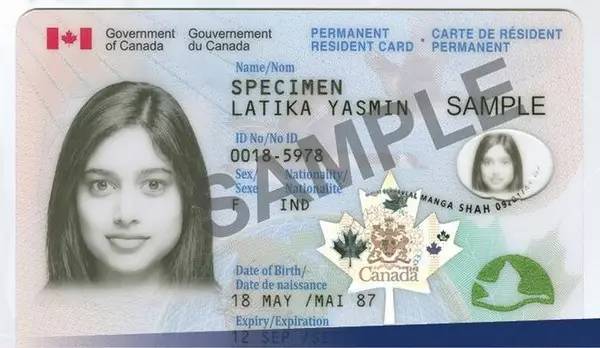
Canadian Maple Leaf Card Replacement Guide: Application Requirements, Tax Declaration Regulations And Customs Record Key Points

Canadian Maple Leaf Card Replacement Guide: Application Requirements, Tax Declaration Regulations And Customs Record Key Points
The latest replacement guide for Canadian maple leaf card.doc, Canadian maple leaf card replacement guide for application for maple leaf card: 1. Canadian customs has records of exit and entry. From June 30, 2014, passengers will be on the borders of both countries, whether they leave and enter the country.
The conditions for applying for a replacement of the Canadian maple leaf card include: First, you need to have a Canadian customs exit and entry record; second, starting from June 30, 2014, passengers must use their passports and leave corresponding records at the borders of the two countries, whether they are leaving or entering, and this information will be shared between the two countries. This move is intended to limit the time spent in the United States and ensure that it does not exceed 6 months. In addition, when applying for a replacement of the maple leaf card, you must submit your tax certificate for the past five years. When applying for a replacement of a maple leaf card, you must submit a Canadian tax return for nearly five years, based on which the immigration department will evaluate the length of time the applicant has lived in Canada. If you cannot provide a complete five-year tax record, or have not declared taxes in the past five years, or have declared as a non-tax resident, you cannot complete the application process smoothly. You must first resolve the relevant tax issues before you can submit the application again. In addition, Immigration has the right to obtain applicants’ entry and exit records from Canadian Customs. Item 23 has been added to the new form for applying for maple leaf card. The Immigration Bureau stipulates that applicants must submit their entry and exit records for Canada over the past five years. The query of these records is mainly based on the following two ways: First, the applicant can try to obtain detailed records from the border between Canada over the past five years; Second, the applicant can authorize the Immigration Bureau to retrieve relevant records on his behalf. If the applicant's Canadian entry and exit records for the past five years do not match the information filled in the form, this may lead to the rejection of the application, or the Immigration Bureau will further conduct an in-depth investigation into whether the applicant fulfills his residence obligations. The Canadian Border Services Agency is optimizing the management of entry and exit records in stages according to the established plan: First, from June 30, 2013, all persons entering and leaving Canada through land borders will need to swipe their cards, and their entry and exit information will be recorded and kept; second, from June 30, 2014, all border channels, including airports, will also need to swipe their cards and ensure that their entry and exit information is properly recorded. In addition, the U.S.-Canada border will communicate information and quickly exchange entry and exit information of all personnel entering and leaving Canada and the United States. For air travelers who attempt to use the U.S. as a transit station to return to China from Canada, they will face greater challenges, as the United States and Canada will join forces to obtain records of where they leave the United States. At the same time, the children were also required to present their academic certificates. During the new application session of the Maple Leaf Card, all school-age children must submit student certificates and academic performance files to study in Canada. The immigration department will contact the child's school by phone to understand his/her learning status and focus on confirming the length of time the child is in school, including the admission time, the number of semesters completed, and the type of courses taken. In addition, applicants are required to have a stable residence in Canada. Since October 2013, Immigration Bureau has stipulated that applicants must have a stable place of residence in Canada. If the applicant does not have a fixed residence and only borrows the address of relatives and friends to apply for a replacement of the maple leaf card, the Immigration Bureau will investigate the landlord of the address. In addition, applicants are required to submit a scan of each page of all passports over the past five years, including blank pages. Between 2007 and 2013, when the Immigration Bureau reviewed the application for a new maple leaf card, it only required the applicant to submit the cover, back cover and page with entry and exit records of the passport. However, this requirement has changed since the second half of 2013, with the Immigration Bureau now requiring applicants to submit scans of every page of all passports over the past five years, including blank pages. This move is intended to eliminate the possibility of applicants committing fraud on entry and exit records. Applicants are required to submit translation notarized documents on each page of all passports over the past five years. If the passport is stamped with an entry and exit seal in English or French, it must be translated and notarized. Applicants are required to submit their application in Canada and we will contact the applicant to confirm their residence status. Those who confirm that the error will directly mail the new card, and the applicant will need to go there in person for other situations. For applicants with sufficient guarantees, the Immigration Bureau will directly send the new maple leaf card to their designated receiving address. Those who pass the review but require an additional interview to obtain a new maple leaf card must go to collect it in person according to the time and place specified by the Immigration Bureau. When applying for a maple leaf card, friends should pay attention to the following points: If you don’t have enough time to stay in Canada, be sure to think carefully during the application stage and prepare sufficient reasons and corresponding evidence to prove the authenticity of these reasons. For example, some applicants failed to return to Canada in time because they had to take care of their parents; some applicants failed to return to Canada on time because of their own illness. Such applicants must provide corresponding hospitalization certificates. The documents required to apply for an extension of the maple leaf card include: a complete application form, payment voucher; a copy of the document, such as a maple leaf card, passport, etc.; a copy of the document proof of identity, such as entry records, driver's license, valid student ID, etc.; and documents proving to live in Canada for the past five years. These documents should be submitted together with the application form. Specifically, it includes: a copy of each page of the passport and a "copy" seal must be stamped. If the entry and exit seal is not in English or French, it must be translated into English and attached with a statement signed by the translator (note: the licensed translator does not need to provide a statement), and does not accept documents translated by family members. Tax Return – Provide tax bills for the first five years of card replacement application. Transcript - All children of appropriate age must submit attendance certificates for the past five years before applying for card replacement; for college students, they need to provide transcripts issued by colleges and universities recognized in Canada in the past five years, and attach the attendance certificate; at the same time, two photos must be placed in an envelope, and the back of the envelope must be stamped with the seal and date of the photo studio; in terms of fees, there are two ways to pay: one is to pay online, and the other is to pay by phone, call 1-888-242-2100 or order documents online to pay to the bank; if the applicant is under 18 years old, he or she must also provide a birth certificate, adoption judgment and guardianship certificate.