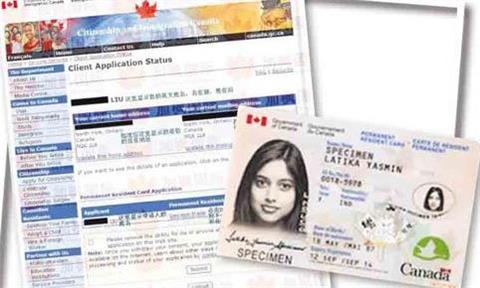
Canadian Permanent Residents' Overseas Application For Travel To Canada Was Rejected, And The Appeal Success Rate Was Low

Canadian Permanent Residents' Overseas Application For Travel To Canada Was Rejected, And The Appeal Success Rate Was Low
Once the travel documents of the immigrant are denied, the relevant permanent resident status will be suspended. If the appeal is not filed with the Appeal Department of the Immigration Department, his permanent resident status will be lost forever.
According to the Canadian Ming Pao, if Canadian permanent residents apply for travel documents to return to Canada overseas, although they have the right to appeal, according to the latest data from the Ministry of Immigration, in 2013, nearly 700 people worldwide did not appeal because of their rejection of travel documents and directly gave up their maple leaf card. Among them, 400 to 500 people are expected to currently live in China. Even with continued appeals, the chances of victory are still very limited. The success rate in 2014 was only 15.4%, which has increased significantly in recent years compared with 32.11% in 2010.
Staying outside Canada for a long time has caused many people to have their maple leaf card validity expired. They only plan to return to Canada and replace the maple leaf card. In this case, they must apply for a one-time valid travel document from abroad in order to return to Canada. However, not everyone can easily obtain such travel documents. For immigrants who have not lived there for two consecutive years in the past five years, immigration officials can refuse their application on the grounds that they have not met their residence conditions; if they appeal the result of this rejection, it may even lead to the loss of permanent resident status.
Immigration lawyer Wang Renduo conducted statistics on the data on the Appeal Department of the Immigration Department (IAD) on travel documents appeals. The results showed that in 2013, a total of 964 people appealed because they were rejected for applying for travel documents. However, the total number of cases that were refused to issue travel documents that year reached 1,662, so 698 people chose to give up the appeal. Taking the Beijing Visa Office as an example, in 2013, the office rejected a total of 940 applications for travel documents.
If the immigrant's travel document is denied, his permanent residence qualification will be suspended immediately; if the immigrant does not appeal to the Appellate Body of the Immigration Bureau, the immigrant will permanently lose his permanent residence qualification.
According to statistics, the success rate of case appeals in 2014 was only 15.4%, while back to 2010, the rate was as high as 32.11%, and has continued to decline since then.
Immigration lawyer Li Kelun emphasized that the main reason for the rejection of travel documents is that more than 90% of the applicants fail to meet the requirement of residency for two years in the past five years, which directly leads to the threat of their permanent resident status.
Wang Renduo pointed out that re-examination is particularly unfavorable for those returning immigrants who have been in China for a period of time. This is because the Immigration Law stipulates that when reviewing travel-related documents, immigration officials have the right to retroactively calculate the length of residence in the past five years from the day the document is received to judge whether they have lived in the past five years for a total of 2 years. Some immigrants originally had their residence time when applying for a maple leaf card, but due to the long time they returned to China, they had insufficient number of days of residence.