
The Purpose Of Canadian Maple Leaf Card And Related Questions And Answers: Immigration Supervision Requirements Are Waiting For You To Understand?

The Purpose Of Canadian Maple Leaf Card And Related Questions And Answers: Immigration Supervision Requirements Are Waiting For You To Understand?
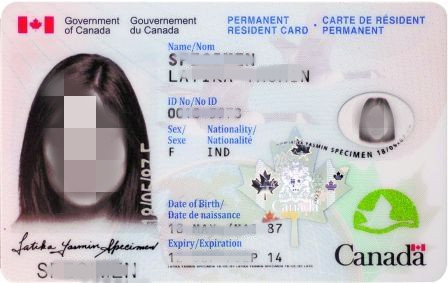
The Canadian Maple Leaf Card is a document that can have permanent resident status, but certain conditions must be met to maintain identity. Similar to the US green card, a permanent resident visa allows holders to live in Canada forever, but must live in Canada for two years within five years.
The Canadian Maple Leaf Card is a certificate that grants cardholders permanent resident qualifications, however, to maintain this status, certain requirements must be met. It is similar to the US green card, giving cardholders the right to stay in Canada for a long time. However, cardholders must live in Canada for at least two years within five years, or work abroad for two years by employed by a Canadian business, or live abroad with a Canadian spouse for two years. These residency periods in Canada are called immigration supervision. Next, we will use the question raised by netizens to "What are the functions of Canadian maple leaf cards? 》 The topic of "is elaboration".
A netizen in Hefei asked:
What is the identity of Maple Leaf Card in Canada? Does holding this card mean that it has Chinese nationality or Canadian nationality? In addition, is it necessary to meet the living requirements of immigrants?
Consultant Yan:
The Canadian maple leaf card represents the qualification of expats to be legally residing in Canada, while immigrants are permanent residents who have obtained Canadian nationality. There are significant differences in the nature of these two documents and the deep meanings they carry. Foreigners who hold maple leaf card still hold a passport of their country of origin and do not need a visa when entering and leaving Canada. They only need to comply with relevant regulations and can pass freely.
Foreigners holding Canadian passports are required to live in Canada for at least three years within four years in order to maintain their citizenship. If the residence time is less than three years, his immigration status will be deprived, which is the so-called immigration supervision system. Only immigrant groups need to abide by this regulation. Once they have obtained Canadian nationality and become citizens, they will no longer be subject to immigration supervision.
A netizen from Pingdingshan asked:
I have obtained a Canadian Maple Leaf Card and would like to ask if this means becoming a legal long-term resident of Canada? In addition, does the maple leaf card need to be renewed? If I return to my motherland, how long can I stay?
Consultant Li:
The Maple Leaf Card is valid for five years and you can apply for renewal in the first nine months of its expiration. But there is a common misunderstanding that needs to be clarified: some people think that once the maple leaf card expires, the Canadian identity will disappear. In fact, this is not the case. The maple leaf card is only a document to help you get into and out of Canada. Even if you live in Canada for a long time, even if you have never applied for a maple leaf card, it will not affect your Canadian identity. Even if your identity card has expired, you can still apply for renewal as long as you have lived in the past five years for two years, and this does not violate immigration regulations. However, if your identity card expires and does not meet the residence requirements, and you do not intend to continue to retain your identity, then you need to actively apply for abdication of the maple leaf card so that you can completely remove the identity of a permanent resident in Canada and then you can successfully apply for a Canadian tourist visa, etc. You can check the "In-depth analysis of the Canadian Maple Leaf Card Replacement Guide by Feiji Overseas, and the recommended essential information for immigration to Canada! 》
Ji'an netizens asked:
If you want to move to Canada, what is the current immigration situation in Canada? What are the policy adjustments? In addition, I am particularly concerned about the issue of immigration supervision. Since there are still business in China that needs to be managed, I cannot live in Canada for a long time. Therefore, does Canada have relevant policies for immigration supervision?
Consultant Chen:
Canada has seen significant growth in reunion immigration quotas in recent years, but with it, an increase in the backlog of applications. To this end, Immigration Canada decided to shorten the waiting time for spouses to apply for permanent residence to within 12 months, a measure aimed at shortening the waiting period for applicants. Through this move, the Canadian Immigration Agency has allowed the backlog of unprocessed immigration applications to be processed, significantly improving the efficiency of applying for reunion immigration applications.
In its latest immigration policy, the Canadian Immigration Agency clearly states that all applicants are eligible to apply for immigration to Canada without the following three circumstances. These three situations include: a threat to Canadian public health; a threat to Canadian public safety; and an applicant may pose an excessive financial burden to Canada's health care system every year.
The Canadian immigration department not only lowered the threshold for health checks, but also introduced three major adjustments to the rapid immigration policy to attract more immigrants: extra scores are given to applicants with outstanding French language skills; extra scores are given to applicants with siblings who have settled in Canada; and at the same time, the requirement that applicants who apply for EE programs must register for an account has been cancelled. These measures have made the conditions for overseas people to immigrate to Canada more relaxed, and have solved many problems in the process of choosing immigration for many applicants.
Yanji netizens asked:
I am currently a sophomore and plan to immigrate to Canada early to lay the groundwork for the upcoming postgraduate degree in Canada. However, there are still many matters pending in China and need to complete undergraduate studies in China, so it cannot meet the Canadian immigration supervision regulations. I wonder if there is any way to bypass this limitation?
Consultant Lu:
If a Canadian company is sent abroad: From a theoretical perspective, the ideal way is to be employed by a Canadian company and then sent to work by the company. In this way, the working period in my country can also be regarded as a period of residence in China.
Living abroad with a partner who has obtained foreign nationality: This has become a common way for Chinese citizens to choose. According to immigration regulations, if one spouse is a Chinese citizen and the other party travels overseas with the citizen as a resident, he or she can be exempted from the domestic residence requirement. For more details, please refer to the "Canadian Immigration Qualification Analysis" released by Feiji Overseas. How to effectively avoid Canadian immigration surveillance restrictions? 》
This is the answer to the relevant questions about Canadian maple leaf card and immigration prison. Most immigrant countries have such immigration supervision mechanisms, whether for long-term or short-term residence. However, compared with other countries, Canada's immigration regulatory standards are relatively strict. Nevertheless, applicants need to pay attention to complying with the prescribed residence period, as this directly affects the renewal of the maple leaf card.

![[In -depth Analysis] Canadian Maple Leaf Card: What, A Comprehensive Interpretation Of Policy Start And Characteristics](https://lcs-sfo.k4v.com/sites/26/article/2025/02/04/0/cover/1738654967.jpg)