Must-see For Immigrants In Canada! What Are The Differences And Requirements For Maple Leaf Card, Permanent Residence And Naturalization?

Must-see For Immigrants In Canada! What Are The Differences And Requirements For Maple Leaf Card, Permanent Residence And Naturalization?
For those who are new to Canadian immigrants, they often cannot distinguish between the relationship between "maple leaf card"/"permanent residence" and "naturalization"/"passport". They always think that they will become citizens of the country after taking the Canadian maple leaf card, but this is not the case.
People who are new to Canada's immigration often find it difficult to distinguish the difference between a "maple leaf card" or "permanent residence" and a "naturalization" or "passport". They often mistakenly believe that obtaining a Canadian maple leaf card means becoming a citizen of the country. However, the reality is not that simple. So, how to meet the conditions for "permanent residence status" and "naturalization"? What is the difference between the two? What are their advantages and disadvantages?

(Click on the picture to join the immigration exchange group)
Canadian Maple Leaf Card
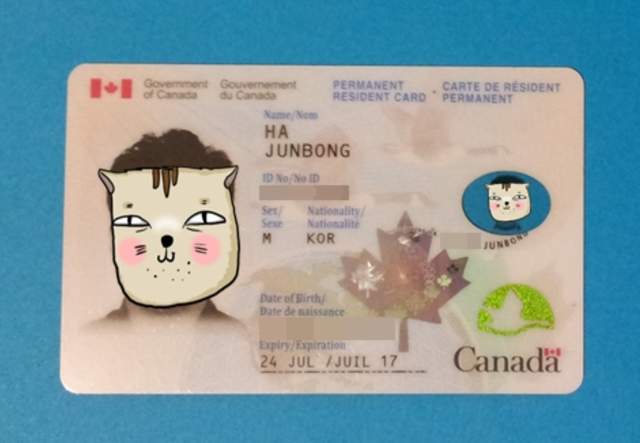
The Canadian Maple Leaf Card is a formal certificate issued by the Canadian government to immigrants who enjoy permanent residence in Canada. Holding this card is equivalent to having permanent residence in Canada.
To maintain the qualification of permanent residents in Canada, we must abide by the so-called "Canadian Immigration Supervision" regulations, which specifically require that in order to immigrate to Canada and obtain permanent resident status, we must live in Canada for a certain period of time. Canada has clear provisions for permanent residents (i.e. those who hold maple leaf cards, which are equivalent to green cards in Canada in the United States), that is, after obtaining an immigration visa, any cumulative residence for five consecutive years is required for no less than 2 years, otherwise their permanent resident status will not be retained. If the primary applicant, deputy applicant and their children want to maintain the qualification of permanent residents in Canada, they must comply with the relevant regulations of the "Canadian Immigration Supervision".
Canadian naturalization
Joining Canadian nationality means that the applicant will waive Chinese nationality and become a Canadian citizen, and hold a Canadian passport and ID card, thereby enjoying the rights and interests that Canadian citizens deserve. According to Canada's current immigration regulations, once you become a permanent resident, you will be qualified to apply for a Canadian citizen as long as you accumulate 3 years of residence in 5 years.
Conditions for applying for naturalization:
Young people under the age of 18 have the right to apply for citizenship without the assistance of their parents. For permanent residents under the age of 18, they can apply for citizenship independently of their parents. Even if parents are rejected when applying for citizenship, minor children still have the opportunity to apply and do not need to wait until they are over 18 years old before applying.
Applicants must hold Canadian permanent resident qualifications, and the qualifications must be fully met. They must not be in the immigration review stage, must not be concealed or fraudulent, nor be deported (that is, the Canadian government formally requires you to leave the country). Even if the maple leaf card has expired when applying for nationality, the application is still feasible.
Adult applicants must meet the requirements of a total of 1095 days of residence (i.e., three years) within the five years before submitting the application. At the same time, there is no need to guarantee that they will live in Canada for more than 183 days a year.
Applicants are required to provide detailed records of tax payments in Canada for three consecutive years over the past five years.
Adult applicants need to clearly state that they are willing to continue to live in the country after obtaining Canadian nationality, while also taking on personal income tax liability as citizens.
Applicants aged between 18 and 54 must have the necessary knowledge and language skills and must take the nationality exam.
How to calculate the Canadian naturalization time
From the date when the applicant submits his application for naturalization, it must be traced back to five years ago as the starting point of calculation.
The period of staying in Canada as a non-permanent resident is also included in the length of residence. The specific calculation method is to calculate half a day per day, but the cumulative upper limit is to convert the two-year residence time of non-permanent resident into one year in proportion.
After obtaining Canadian permanent resident status, the actual length of residence in Canada is included in the scope of consideration, and the entry and exit stamp on the passport is the basis for calculation.
d) As long as the above naturalization conditions are met, you can apply for naturalization within the first 5 years.

(Click on the picture to join the immigration exchange group)
The difference between permanent resident status of Canadian citizens
Ø Permanent residents have no political rights
Ø Permanent residents cannot have criminal records in Canada
Ø Permanent residents cannot hold important positions in the military and government departments
Ø If permanent residents do not have Canadian passports, they will not enjoy corresponding visa-free treatment.
If you like traveling wherever you want, please apply for naturalization
This has become an important motivation for many people who want to join nationality - the attraction of Canadian passports. It is well known that holding a Canadian passport can enjoy visa-free treatment in many Western countries, such as highly regarded European tourist destinations.
Holding a Canadian passport means that you can easily achieve "just walk" travel without having to go through visa procedures in advance. Because of this, many travel enthusiasts were moved by it and chose to become Canadian citizen.

(Click on the picture to join the immigration exchange group)
If you need to return home frequently, please retain your permanent resident status first
Once you become a Canadian citizen, you are completely separated from your Chinese citizenship. Whether you are returning to China for business or visiting relatives and friends, you must go to the embassy of our country to apply for a visa, and you will have to pay a certain fee for each application.
Many people even have experienced visa rejection, and the reason is ridiculous: they are considered to have an immigration tendency. Therefore, if you have relatives or careers in China and need to travel frequently, it is best to temporarily postpone the application for nationality. Although the process of applying for a Chinese tourist visa is not complicated, the various restrictions still make people feel: why is it so uncomfortable to return to China even if you are clearly Chinese?

(Click on the picture to join the immigration exchange group)
If you love to go to the United States, then there is not much difference between naturalization and permanent residence
Most of Canada's major cities are located on the border between the United States and Canada, so many people often go to and from the United States. From this perspective, the difference is not significant. After becoming a Canadian citizen, you will enjoy visa-free treatment; even if you hold a permanent resident status, you can apply for a ten-year tourist visa. In addition, you can also choose to apply for a neighboring country pass to and from the United States in this way.

(Click on the picture to join the immigration exchange group)